
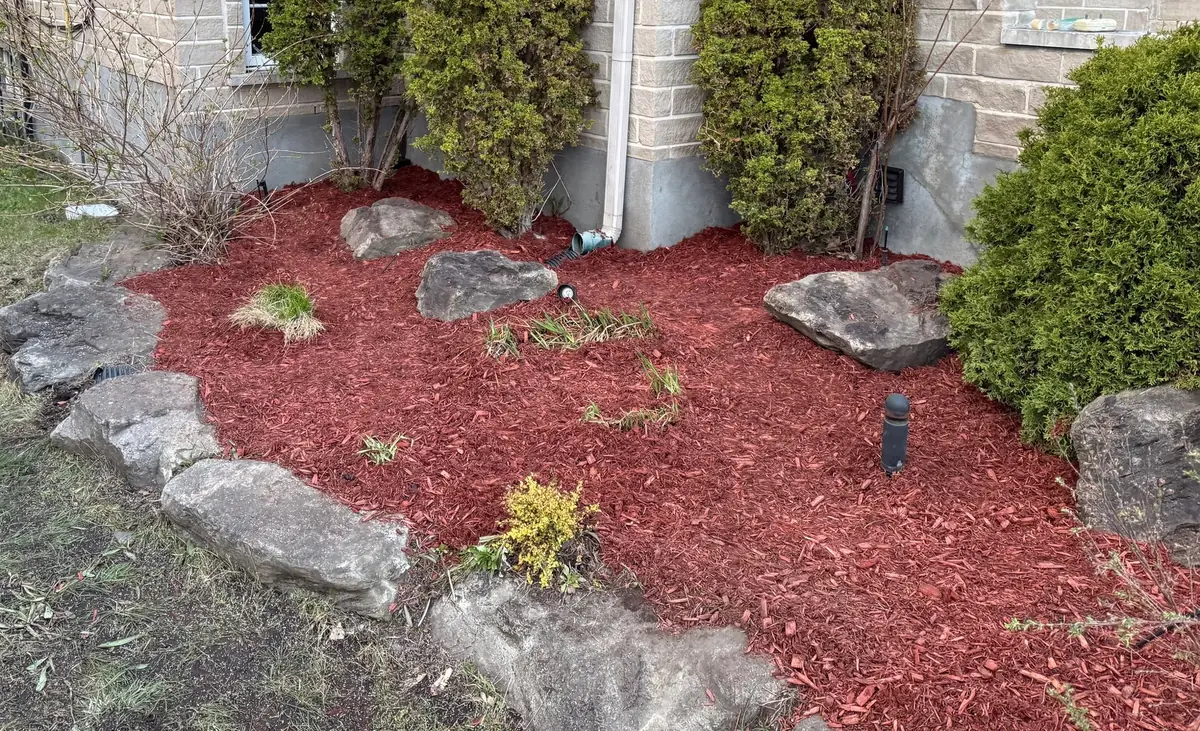
Compost is decomposed organic material used to amend soil; mulch is a surface covering. Organic mulch can reduce weed emergence, moderate soil temperature and help retain moisture. These roles overlap in some products, but they should remain separate lines in your order and plan. For example, an existing bed might require an amendment and a surface cover, while a new raised bed needs a suitable rooting mix. Do not count the same volume twice unless you genuinely intend two separate layers.
Measure the net area to be covered, subtracting paving or other excluded surfaces. Enter the depth you intend to add, rather than the total depth already present. If topping up mulch, first inspect what remains. Source recommendations vary with material and whether depth is measured before settling: Espace pour la vie describes 8–15 cm before compaction around trees and shrubs, while Minnesota Extension describes a 2–4 inch layer for its general garden guidance. These are context-specific examples, not automatic settings in this tool.
Keep mulch away from trunks and plant stems, and do not bury the root collar. Espace pour la vie advises leaving 10–15 cm clear around the collar and keeping mulch separate from the soil. Our ordering suggestion is to save the material name, measured area, added depth and optional allowance on separate lines. State any delivery access restrictions and ask the supplier about settling and product suitability. The estimate is a geometric volume, not a soil analysis, drainage repair plan or guarantee of the delivered material’s composition.
Planning note. Sources checked October 9, 2026. Planning suggestions, horticultural facts and municipal rules are kept separate: confirm anything that depends on your plant, site or address.