
Tasting notes and cupping, made simple.
You do not need a trained palate to taste coffee well. You need a method, a few words, and the habit of paying attention.
What a tasting note is
A tasting note is a word for something you notice: a smell, a flavour, or the way the coffee feels in your mouth. “Chocolate” or “citrus” does not mean anything was added. It means the coffee reminds you of that.
Professionals sort notes into three groups: aroma (what you smell), taste (sweet, sour, bitter, salty, umami) and mouthfeel (light and tea-like, or heavy and syrupy). Starting with those three makes the vocabulary easier.
Aroma
What you smell
- Fruity
- Floral
- Nutty
- Chocolatey
- Roasty
Taste
What your tongue finds
- Sweet
- Sour or bright
- Bitter
- Salty
- Savoury
Mouthfeel
How it feels
- Light, tea-like
- Creamy
- Syrupy
- Drying
- Heavy
Start broad, then get specific
- Fruity Citrus Lemon
- Nutty Almond Toasted almond
- Sweet Chocolate Dark chocolate
Finding words without a wheel
Begin broad, then narrow. Is it fruity, nutty, chocolatey, floral or roasty? Then ask which kind: citrus or berry, almond or hazelnut. The World Coffee Research Sensory Lexicon is a shared vocabulary that professionals use to describe coffee.
How cupping works
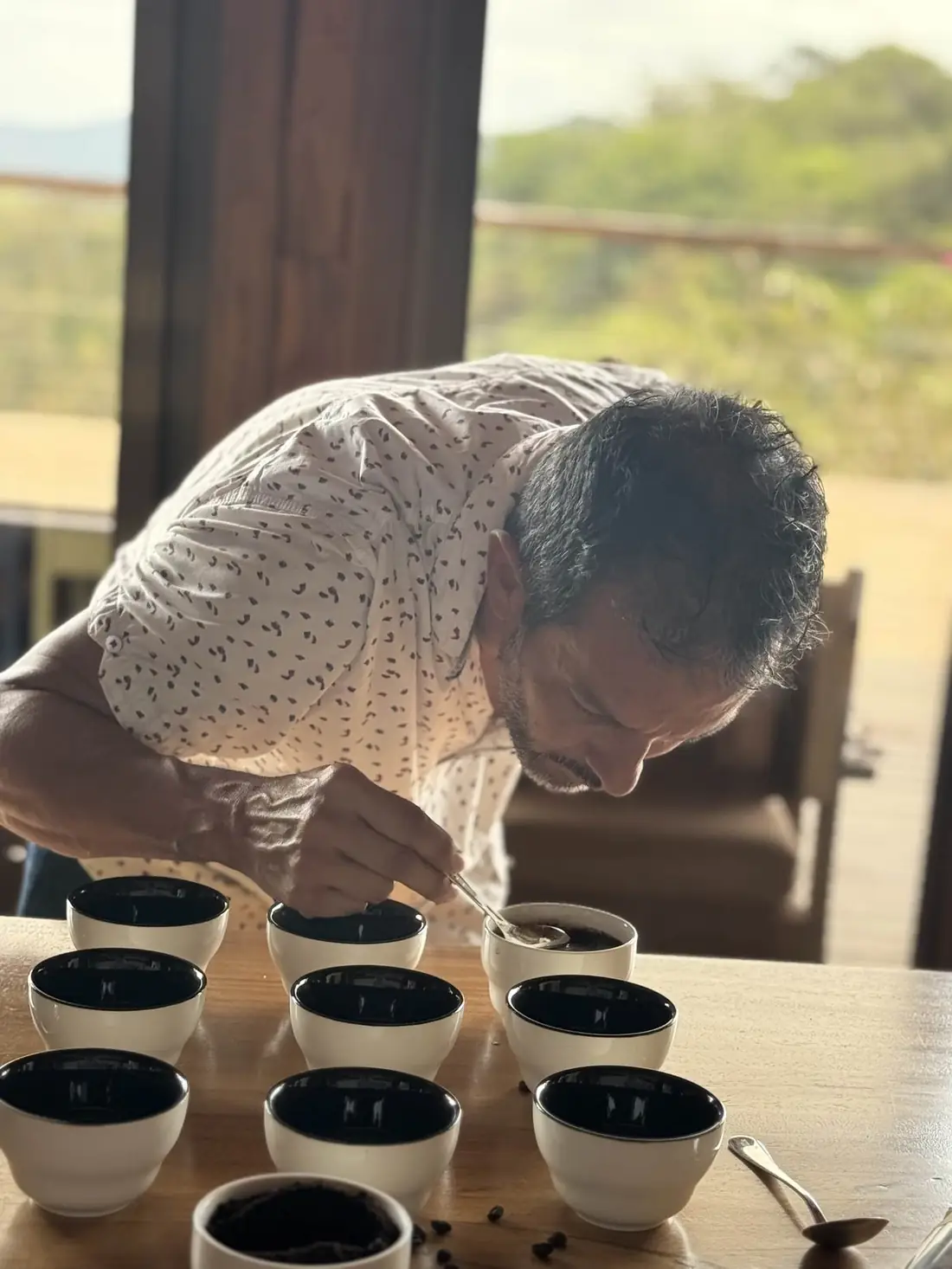
Cupping is the standard way to taste coffees side by side. Under the Specialty Coffee Association’s standard, you weigh 8.25 g of freshly ground coffee for each 150 ml of water, pour water at about 93 °C, and wait four minutes. You then break the crust that forms on top with a spoon, skim off the foam, and taste the coffee with a spoon as it cools, usually about 10 to 15 minutes after pouring. Slurping spreads the coffee across the palate.
Tasting several cups next to each other makes differences easy to notice. It is how coffee professionals taste, how we tasted on our visit to Costa Rica, and the simplest way to compare any coffees at home.
- Weigh 8.25 g of coffee for each 150 ml of water, then grind it
- Smell the dry grounds, then pour water at about 93 °C
- Wait four minutes
- Break the crust with a spoon and lean in to smell
- Skim off the foam
- Taste with a spoon as it cools, about 10 to 15 minutes after pouring, and slurp
Monte Romo
Monte Romo is a dark roast. We have not published tasting notes for it yet, because the best notes come from many cups tasted by many people. Request a sample and write your own.
General coffee information, not a statement about Monte Romo. Figures come from the sources listed below and vary by farm, season and brewer. We have not yet confirmed Monte Romo’s variety, elevation, processing or harvest method.
Sources and further reading
- World Coffee Research — Sensory Lexicon
- Royal Coffee — How to set up and run a cupping (SCA dose, grind, water, steps)
References checked October 13, 2026.